by admin | Jun 18, 2025 | Uncategorized
What’s Changing in the IT Job Landscape?
Gone are the days when knowing just C++ or Java was enough to secure a job. Employers now expect expertise in a broad range of technologies including Artificial Intelligence (AI), Machine Learning (ML), Data Science, Cloud Computing, Cyber Security and DevOps. The rise of automation and AI tools have also made it essential for professionals to continuously update their skills. Today’s IT companies are looking for professionals who can build intelligent systems, secure cloud environments and analyze complex datasets—all of which require a deeper and more specialized skillset than before.
Additionally, employers no longer prioritize marks alone. Instead, they value students who can demonstrate real-world problem-solving skills through projects, internships, hackathons and open-source contributions. This change presents a challenge but also opens up many new opportunities for proactive and self-motivated learners.
Skill Development: Beyond the Classroom
In this dynamic environment, students must focus on acquiring in-demand skills. Online learning platforms like Coursera, edX, Udemy and LinkedIn Learning have made it easier than ever to gain certifications in popular domains such as Python programming, data analytics, AI and cloud platforms like AWS and Azure. These certifications not only validate your skills but also set you apart in the job market.
Students must also go beyond theory and apply their knowledge in practical ways. Building projects, contributing to open-source platforms and maintaining an active GitHub profile are all excellent ways to demonstrate your technical skills to recruiters.
The Power of Hackathons and Coding Platforms
Participating in coding competitions and hackathons is another powerful way to build skills and gain visibility. Platforms like HackerRank, LeetCode, Codeforces, and Devfolio host regular challenges that allow students to solve real-world problems. These events not only test your coding ability but also enhance your critical thinking and teamwork skills. Many companies, including top tech firms, scout talent directly from these competitions, making them an effective path to employment.
Leveraging LinkedIn for Job Opportunities
LinkedIn is no longer just a platform for experienced professionals. It has become an essential career tool for students. An optimized LinkedIn profile, complete with certifications, projects, internships, and thoughtful posts, can attract recruiters and potential collaborators. Students should actively connect with alumni, industry experts, and HR professionals. Sharing regular updates on projects, achievements, and learnings increases profile visibility and builds your personal brand.
Gaining Real-World Exposure through Internships and Freelancing
While theoretical knowledge forms a foundation, real-world exposure is what truly prepares students for IT careers. Internships—whether in startups, mid-size companies or large MNCs—offers valuable insights into team dynamics, real-time problem-solving and project management. Platforms like Internshala, Fiverr, and Upwork help students find freelance projects or short-term work experiences that can enhance their portfolios and confidence.
Even unpaid internships can be beneficial if they offer a chance to work on impactful projects and learn from experienced mentors. Ultimately, experience speaks louder than marks when it comes to hiring.
Personal Branding: Blogging and Portfolios
In the age of digital presence, having a personal blog or website adds credibility. It serves as a portfolio where students can showcase their projects, write about technical concepts, or document their learning journeys. Tools like WordPress, Medium or GitHub Pages make it easy to create such platforms. A well-maintained portfolio not only helps during placements but also makes a lasting impression on interviewers.
Choosing the Right College Matters
While individual effort is key, the role of a good academic institution cannot be overlooked. A future-ready college bridges the gap between classroom learning and industry requirements. It does this by updating its curriculum to reflect current technologies, inviting industry professionals for guest lectures, offering strong placement support, and organizing events like seminars, coding competitions and tech fests.
If you are aspiring to pursue BCA in the Delhi NCR region, it is vital to research and choose wisely. Look for the best BCA college in Delhi or the best BCA college in Delhi NCR especially the one that offers BCA without Maths, making it accessible for students from non-mathematics backgrounds. These institutions often design their curriculum in a way that emphasizes practical knowledge, employability and global readiness.
Emerging Career Paths for BCA and CS Graduates
The IT industry is filled with exciting career opportunities for those with the right skills. Here are a few high-demand job roles and their associated skillsets:
– AI/ML Engineer – Python, TensorFlow, data modeling, neural networks
– Cloud Architect – AWS, Azure, Kubernetes, CI/CD pipelines
– Cybersecurity Analyst – Ethical hacking, firewalls, network security tools
– Data Analyst – SQL, Excel, Power BI, Python
– Full-Stack Developer – HTML, CSS, JavaScript, React, Node.js
– Blockchain Developer – Solidity, smart contracts, decentralized apps (DApps)
The best part? Many of these roles do not require years of experience. A solid portfolio and demonstrated ability to apply skills in real-world scenarios can land you interviews even before graduation.
How to Make the Most of College Years
To succeed in the current IT job market, students must take a strategic approach throughout their degree. Here’s a suggested roadmap:
– First Year: Focus on building strong fundamentals in programming (C, Python), learn basic data structures, and join college tech clubs.
– Second Year: Start exploring certifications in specialized domains like AI, web development, or data analytics. Participate in coding competitions and apply for internships.
– Third Year: Develop major projects, work on real-time applications, and prepare for placements by building a strong resume, GitHub profile, and LinkedIn network.
By the time of graduation, a student should ideally have a few completed projects, at least one internship experience, an active GitHub account and one or two industry-recognized certifications.
Conclusion: Adaptability Is the New Skill
In a rapidly evolving job market, adaptability is the most important skill you can have. For BCA and Computer Science students, succeeding in IT is no longer about just securing a degree—it’s about embracing a mindset of continuous learning, being curious, and taking initiative.
Choose a college that supports innovation, encourages hands-on learning, and stays updated with industry trends. Whether you are exploring the best BCA college in Delhi, best BCA college in Delhi NCR, or the best BCA college in Delhi NCR without Maths, ensure the institution offers more than just a syllabus—it should offer a launchpad for your career.
The IT industry rewards those who learn fast, experiment often, and showcase what they’ve built. Start early, be consistent, and let your skills speak for you. The future is tech-driven, and with the right tools and mindset, it’s yours to shape.
Abhinav Nirwal
Assistant Professor
BCA Department
by admin | Jun 4, 2025 | Uncategorized
Universities and educational institutes continually face the challenge of producing industry-ready graduates who can seamlessly adapt to the ever-evolving global market. Today’s dynamic landscape demands professionals with skills that extend far beyond traditional academic boundaries. The BBA programs, all across the globe, have, consequently begun incorporating papers such as Information Technology, Artificial Intelligence, Data Analytics, Ethical Corporate Practices, Digital and Innovative Practices ensuring that students are well-equipped to navigate the complexities of the modern business world.
Emerging Trends:
Experiential learning:
Internships, placement assistance and experiential learning opportunities such as field trips, outdoor education, simulation, service learning, and project-based learning are becoming a part of the curriculum which make the students corporate-ready. These activities are considered as important as the theoretical concepts taught in the classroom.
Employability-driven Program:
For decades universities focused on theoretical concepts; that approach, however, is beginning to change now as institutions increasingly emphasize practical application, experiential learning and industry collaboration to equip students with skills and knowledge required to thrive in today’s fast-paced, ever-evolving professional landscape. Consequently, the institutes of higher education are tying up with the industry and their alumni networks to make the programs more and more employability driven.
Data Analytics and Artificial Intelligence:
Further, incorporating cutting-edge fields such as data analytics and artificial intelligence into the curricula is becoming essential to prepare students for the demands of the modern workforce. Artificial intelligence and data analytics include interpreting and analysing data for the better decisions. It is mainly used to identify consumer behaviour, market trends and operational efficiencies. To build a digitally driven business landscape, the industry is increasingly using the tools of AI and Data analytics. Most BBA courses are , therefore, including these in their business curricula.
Data-Driven Decision Making:
One can be expected to make sound decisions only if s/he has acquired the skill to interpret the data. Papers on research methods are, therefore, most appropriate for teaching the art of reading and interpreting the data. The BBA curriculum in some of the institutes includes training students on SPSS, Python, R, and SQL. In coming years, the students will learn the other software such as Forsta and software promoted by the Research Software Alliance (ReSA).
Entrepreneurship Mindset:
After a BBA degree, the students will be able to start new ventures. These days, they receive complete knowledge about how to start a venture from ground level including rules and regulations. The BBA courses are designed to provide complete information about qualities of a businessman as also information about local and global competitors.
E-Commerce:
As online businesses are constantly on the rise, BBA graduates are also apprised of the online buying and selling process. It helps them understand the digital marketplace and online shopping trends. Moving ahead BBA colleges in Delhi are likely to offer more subjects related to social media marketing and digital commerce.
Information Technology:
The BBA program equips students with essential IT skills including data analytics, cybersecurity, digital marketing and e-commerce to prepare them for success in today’s tech-driven business world. These skills provide students with more competitive advantage.
Hybrid working environment:
The BBA program develops students for hybrid work setups such as remote team handling and digital collaboration.
Emphasis on Soft Skills:
More emphasis is being laid on soft skills such as communication, presentation, public speaking, leadership, problem-solving and emotional intelligence which are crucial for success in the corporate sector. JIMS Vasant Kunj II ensures that students move out of the institute as well-rounded and result-oriented individuals.
Globalization and cross-cultural administration:
BBA students in Delhi are taught about universal interconnectedness and its advantages for the global economy. Here there is a higher focus on setting up of global ventures, EXIM policies and handling global projects.
Human-Centric Skills:
The BBA courses now organize role-plays in the classrooms to teach the students the art of handling high-value tasks involving person-to-person interactions and navigation of complex and chaotic real-world situations.
Artificial intelligence in the classroom:
Increasingly becoming a priority for the educators, the teaching of AI is crucial for preparing the students to navigate the complexities of modern industries and innovate solutions for the future. There is, hence, a renewed focus on the responsible use of AI as well as learning about it and understanding when and how it can be used; students, in the BBA course at JIMS ,VK-II are, consequently, taught how to use it safely and when it is better to rely on real intelligence rather than artificial intelligence.
Digital Transformation:
Selling products and services through Digital media is a revolution that will be all pervasive in a few years. It is, therefore, important for the BBA students to become digitally literate. In the BBA course at JIMS , students are trained in Digital methods to promote the goods and services of the businesses.
Blockchain and Financial Technology:
Fintech innovations such as digital wallets and other automated trading services have changed the way trading is performed. BBA students are trained in blockchain application, crypto rules, terms and conditions for career growth and financial management for companies.
Rise of Freelancing:
BBA students can now opt for freelancing opportunities which are high in demand in the present corporate scenario. All that they need to have is knowledge of new advancements and innovations, the ability use digitized facilities and it can be a promising growth opportunity for them.
Agility:
The market conditions are changing rapidly with a change in customer needs, preferences, purchasing power and increasing competitiveness. BBA students are sensitized to this changing world and are constantly reminded of the importance of adaptation to the changing business conditions. In the new course curriculum designed for them, they learn flexible decision-making, project management and identification of consumer needs while adherring to a fixed plan.
Infrastructure:
BBA colleges in Delhi NCR are equipped with smart classrooms and have state-of-the –art auditoriums and amphitheatres for several Extra and Co-curricular activities making the environment conducive to effective learning.
Curriculum:
NEP 2020 introduceda new curriculum by utilizing a multidisciplinary approach, a flexible undergraduate system for overall improvement and outcome-based education for students. New subjects such as Digital literacy, Entrepreneurship, and Information Technology are introduced on the basis of the current requirements of the market.
Sustainability and Ethical Approach:
Corporate social responsibility is an integral part of the syllabus and in the coming time, global companies will invest more into it. In the BBA course, students learn new and creative CSR approaches adopted by the businesses and how these activities lend global recognition to the brands.
Lifelong Study and Upskilling:
Finally, BBA programs may evolve as lifelong study hubs offering modular and competitive courses that will attract students for skill development for advancement in career.
Dr. Rupal Ramawat
Assistant Professor
JIMS Vasant Kunj II
by admin | May 29, 2025 | Uncategorized
Introduction
The digital revolution has transformed every sector, making software development one of the most sought-after career paths today. For students pursuing a Bachelor of Computer Applications (BCA), this opens up a wealth of opportunities. The BCA program provides a strong foundation in programming languages, software development principles, and computer applications, making it a solid stepping stone toward a thriving career in software development.
But to stand out in this dynamic and competitive field, a degree alone is not enough. A strategic, multi-faceted approach is essential—one that includes skill-building, practical experience, networking, and continuous learning. This blog will guide you through actionable steps to prepare for a successful software development career with a BCA degree.
1. Understand the Software Development Landscape
Before diving into technical skills or job applications, it is crucial to understand what software development actually entails. Broadly, it involves designing, coding, testing, and maintaining software systems. The industry spans various domains—web development, mobile applications, game development, cloud computing, and artificial intelligence, to name a few.
Start by exploring different roles such as:
Knowing what excites you most will help you focus your learning efforts and choose the right career path.
2. Strengthen Your Core Programming Skills
At the heart of software development is programming. BCA students are usually introduced to languages like C, C++, Java, and Python. However, mastering them requires consistent practice.
Here’s how to improve your programming skills:
- Solve Problems Daily: Platforms like HackerRank, LeetCode, and Codeforces help improve logic and algorithmic thinking.
- Learn Data Structures and Algorithms (DSA): DSA forms the backbone of efficient programming and is a favorite topic in technical interviews.
- Work on Mini Projects: Start building small applications such as calculators, to-do lists, or chat apps to apply what you’ve learned.
3. Get Hands-On with Development Tools
Beyond coding, a good software developer must be familiar with development tools and environments. You should gain experience in:
- Version Control: Learn Git and GitHub for collaborative coding and source control.
- IDEs and Code Editors: Get comfortable with tools like Visual Studio Code, IntelliJ IDEA, or Eclipse.
- Databases: Learn SQL and database management systems like MySQL or MongoDB.
- Frameworks and Libraries: Depending on your interest (web, mobile, etc.), explore relevant frameworks (e.g., React for web, Flutter for mobile, Spring for Java).
Hands-on projects using these tools will enhance both your learning and your resume.
4. Build a Solid Portfolio
Employers look for proof of skills, not just a degree. That is where your portfolio comes in. A well-crafted portfolio showcases your:
- Personal Projects: Include details, screenshots, and GitHub links.
- Open Source Contributions: Contributing to open-source projects shows initiative and collaboration.
- Internship Work: Document your role, responsibilities, and outcomes of any internships or freelance gigs.
Use GitHub to host your code and consider building a personal website to highlight your projects and professional story.
5. Gain Real-World Experience
While theoretical knowledge is important, practical experience is what truly prepares you for a job. Here are some ways to get it:
- Internships: Apply for internships during or after your BCA. It is one of the best ways to gain industry experience.
- Freelancing: Platforms like Upwork or Fiverr allow you to work on real client projects.
- Hackathons and Coding Contests: These events challenge you to solve real problems under pressure and improve your teamwork skills.
Even unpaid or small gigs can have a big impact on your learning curve and your resume.
6. Stay Updated and Keep Learning
Technology evolves rapidly. A language or framework that is in demand today may be obsolete tomorrow. Stay updated by:
- Reading Tech Blogs and Books: Follow platforms like Medium, Dev.to, and Stack Overflow.
- Watching Tutorials: YouTube, Udemy, and Coursera offer quality content, both free and paid.
- Attending Workshops and Seminars: These events offer exposure to current trends and networking opportunities.
You might also consider certifications in areas like cloud computing (AWS, Azure), DevOps, or cybersecurity to enhance your credentials.
7. Pursue Higher Education or Specialization (Optional)
If you are aiming for advanced roles or want to specialize, pursuing an MCA (Master of Computer Applications) or certifications in niche fields like Data Science, AI, or Cybersecurity can add significant value.
However, this is optional. Many successful developers have achieved career growth through self-learning and work experience.
8. Network and Build Connections
The software industry thrives on collaboration and referrals. Building a network can open up new opportunities. Here is how to grow your network:
- LinkedIn: Maintain an active profile. Share your projects and achievements. Connect with professionals and alumni.
- Tech Communities: Join developer groups on Discord, Reddit, or Stack Overflow.
- Meetups and Conferences: Attend local or virtual events to meet peers and industry experts.
Your network can help you find mentors, collaborators, and job leads.
9. Prepare for Job Interviews
Once you are confident in your skills, start preparing for technical interviews. Here is a checklist:
- Coding Interviews: Practice DSA problems and mock interviews.
- Technical Rounds: Prepare to explain your projects, approach to problem-solving, and fundamentals of software development.
- HR Rounds: Work on communication skills, confidence, and answering behavioral questions.
- Resume and Cover Letter: Tailor each application to the job role. Highlight relevant skills, certifications, and achievements.
There are many online mock interview platforms and communities that can simulate real interviews and provide feedback.
10. Apply Strategically and Stay Persistent
Apply for entry-level roles such as:
- Junior Software Developer
- Web Developer
- Software Tester
- QA Analyst
- System Analyst
Do not be discouraged by rejections. Use each experience as a learning opportunity. Stay motivated and keep improving your skills.
Career Building After a BCA Degree
- Specialize in high-demand fields like Web Development, App Development, Data Analytics, or Cybersecurity after BCA.
- Earn certifications in trending technologies like Python, Cloud Computing, AI, and DevOps to enhance your job prospects.
- Pursue internships during or after BCA to gain practical experience and strengthen your resume.
- Build a strong GitHub portfolio by working on real-world projects and contributing to open-source platforms.
- Prepare for government and private sector IT jobs by appearing in exams like SSC, UPSC (with IT roles), or bank technical roles.
- Freelance or work remotely using platforms like Upwork, Fiverr, or Toptal to kickstart your tech career from anywhere.
- Network with industry professionals via LinkedIn and tech communities to uncover job opportunities and mentorship.
- Consider pursuing MCA or MBA if you want to specialize further in technology or move into managerial roles.
- Apply for entry-level roles like Software Developer, QA Tester, Technical Support, or IT Analyst to begin your professional journey.
- Never stop learning—stay updated with new tools, languages, and frameworks to remain relevant in the evolving tech landscape.
Conclusion
A BCA degree provides a strong base for a career in software development, but real success comes from what you build on top of it. The journey involves consistent learning, practical application, and proactive engagement with the tech community.
Start small, build confidence through projects, and grow steadily. Whether you dream of joining a tech giant, launching a startup, or freelancing globally, the tools and strategies shared above will guide you there. The key is to begin—and never stop learning.
Your dream software development career is just a few keystrokes away. JIMS Vasant Kunj II empowers students to build successful careers in the software industry through industry-oriented training and hands-on learning. Recognized as one of the best BCA colleges without Maths inDelhi NCR, it offers a robust curriculum tailored for tech careers. With expert faculty, state-of-the-art labs, and strong placement support, it prepares students for real-world software development roles. Whether you are passionate about coding, app development, or data science, this college provides the right platform to turn your dreams into reality.
Neha
Assistant Professor
Department of Computer Application
by admin | May 23, 2025 | Uncategorized
The hospitality industry does not measure brilliance; it watches for endurance. Given this reality, a course in hospitality introduces students to the dynamic world of service and guest relations across fields such as hotels, restaurants, travel and tour operations. The skills required to perform well include customer service, communication, management and operations. This course prepares the learners for careers in hospitality by emphasizing professionalism, cultural awareness and business acumen ensuring that they deliver exceptional experience in diverse settings. If you are considering pursuing a career in this dynamic field, a degree in hotel management from Jagannath Institute of Management Sciences Vasant Kunj-II, New Delhi can open the doors to a wide range of exciting and rewarding career opportunities. From working in five-star hotels to managing event spaces, the possibilities are vast. Below are the top ten careers you can explore with a Hotel Management Degree.
1. Front Office
The front office is the first point of contact for guests and the Front Office Manager ensures that the check-in/check-out processes, reservations and guest interactions run seamlessly. This position requires excellent communication and organizational skills. The manager at this position is responsible for supervising the front desk staff, handling guest complaints and ensuring that all guest requests are addressed promptly. S/he supervises front office staff, including receptionists, concierge and bell desk personnel ensuring high standards of guest service. His/her role is , all in all, crucial in ensuring smooth operations at a hotel’s front desk. Further, he manages reservations, check-ins, and check-outs, handles guest complaints and coordinates with other departments to meet guest needs. S/he also, from time to time, trains staff, maintains records and ensures compliance with hotel policies and procedures. Besides all this,s/he oversees billing and cash handling, maintains occupancy rates and ensures guest satisfaction. Leadership and Communication skills are, for all practical purposes, vital in this domain for creating a positive guest experience.
2. Executive Chef
The executive chef is the commanding officer of the kitchen in a Hotel. This role requires creativity, excellent culinary skills and an ability to manage large teams in a high-pressure environment. Executive chefs often play a key role in maintaining the overall quality of dining experience, which is critical to the hotel’s reputation. They ensure consistency, maintain hygiene standards and coordinate with suppliers. Their leadership drives kitchen efficiency, creativity and customer satisfaction making them crucial to a Hotels culinary success.
3. Event Manager
Event managers coordinate and execute events, ensuring seamless implementation. Responsibilities include planning, budgeting vendor management and troubleshooting to de deliver successful event that meets client objectives and exceeds attendee expectations. An event Manager ensures smooth execution by managing staff, setting up venues, liaising with clients and addressing any issues during the event. Their role is crucial in delivering high-quality service, maintaining client satisfaction and upholding the hotel’s reputation. Event managers ensure that every event is executed smoothly, from catering to logistics, making it one of the most rewarding careers for those who love working in dynamic environments.
4. Sales and Marketing Manager
They develop and implement marketing strategies, coordinate advertising campaigns and manage social media presence. This position requires creativity, strong communication skills, and an in-depth understanding of the latest marketing trends. Sales and marketing managers help increase revenue and drive brand recognition, making it a vital role in the hospitality industry.
5. Housekeeping Manager
A Housekeeping Manager oversees hotel housekeeping operations, ensuring cleanliness and maintenance of guest rooms, public areas and facilities. They supervise housekeeping staff, manage laundry services and oversee the cleanliness of guest rooms, public areas and back-of-house facilities. This role requires a keen eye for detail, organizational skills and a focus on quality.
6. Food and Beverage Manager
A Food and Beverage (F&B) Manager oversees F&B operations, ensuring high-quality service, food presentation and customer satisfaction. Responsibilities include menu planning, inventory management, staff training, quality control and revenue growth. They manage F&B outlets, events and teams to deliver exceptional dining experiences and drive business results. F&B managers ensure the quality of food and drink, manage staff, handle inventory, and control costs. The role also involves developing menus and coordinating with chefs to ensure the dining experience aligns with the hotel’s brand. A successful F&B manager balances creativity and practicality to enhance the overall guest experience.
7. Cabin Crew
A cabin crew career offers a dynamic lifestyle involving travel, customer service and safety responsibilities. Flight attendants ensure passenger comfort, handle emergencies and represent the airline professionally. This role requires excellent communication, grooming and adaptability. It is ideal for those passionate about travel, meeting new people and working in a fast-paced environment. Cabin crew in aviation are responsible for ensuring the safety, comfort and well-being of passengers during flights. Additionally, they provide food, beverages and customer service, address passenger concerns and maintain a calm, professional demeanor.
8. Cruise
Exciting job opportunities await Hotel Management students aboard luxury cruise liners. A rewarding career path with excellent growth and networking prospects. Chefs on a cruise play a vital role in preparing diverse, high-quality meals for passengers and crew. They manage kitchen operations, plan menus, ensure food safety standards and cater to various dietary needs. Working in teams, cruise chefs deliver exceptional dining experience contributing significantly to guest satisfaction and onboard hospitality. A Food and Beverage Service Associate on a cruise delivers exceptional dining service by taking orders, serving meals and beverages, and ensuring guest satisfaction. They maintain cleanliness, follow safety standards, and assist in setting up dining areas. Their role enhances the overall onboard experience through professional, friendly and efficient service.
9. Tourism Officer
A tourism officer works to promote a hotel or resort as part of a broader tourism goal. S/he is also involved in creating packages for travelers, managing partnerships and promoting the destination through various marketing channels. A tourism officer needs strong networking skills, an understanding of tourism trends and the ability to work with diverse groups. A tour operator leads and educates travelers about historical sites, cultural landmarks and local attractions. They provide insightful commentary, ensure group safety, and enhance the travel experience through engaging storytelling. Guides also manage logistics, answer questions and represent local heritage, playing a key role in promoting tourism and cultural understanding.
10. Bartender
Bartending offers a dynamic career path with growth prospects, creative expression and interaction with diverse customers, making it a rewarding profession in hospitality. While working as a bartender, one tends to develop mixology skills ,learns to manage bar operations and provide exceptional customer service. With these skills one can work in hotels, resorts, restaurants, bars pubs, Cruise liners. Finally, if entrepreneurship is in your mind, you can even start own ventures.
Conclusion
Hotel management is a vibrant and diverse field offering numerous career paths for those with the right skills and ambition. Jagannath Institute of management Science Vasant kunj-II, is Best Hotel Management College in Delhi NCR, where you can learn all skill sets in the 3-year bachelor course in Hotel Management. Whether you are drawn to the basic concept of managing day-to-day operations, planning grand events or leading food and beverage services, the opportunities in this industry are abundant. As the hospitality industry continues to grow, the demand for trained and skilled professionals will remain high, making it an attractive career choice. If you have a passion for service, leadership, and creativity, a Hotel management course can be your gateway to a fulfilling career in this exciting field.
Chef Rajesh Kumar.
Assistant professor
Department of Hotel Management.
Jagannath Institute of Management sciences
Vasant Kunj-II, New Delhi.
by admin | May 22, 2025 | Uncategorized
Interior Design is not merely about creating spaces that are aesthetically pleasing. It is about changing environments to make them more functional, comfortable and healthy. With smart homes, green architecture and innovative spatial solutions gaining traction, interior design has become a very specialized and dynamic career.
For those who are talented and enthusiastic about designing spaces, a degree in Interior Design sets the stage for a career rich with rewarding professional opportunities. But the journey to a successful career in design starts with selecting the right college. Among India’s highest-rated institutions, JIMS VK II (Jagannath Institute of Management Sciences, Vasant Kunj II) is the best Interior Design college in Delhi-NCR due to its industry-focused curriculum, experienced faculty, and excellent placement record.
In this blog, we will explore the top career paths available after a degree in Interior Design and why JIMS VK II should be your top choice if you are planning to enter this creative field.
________________________________________
What is Interior Design?
Interior Design is the science and art of enriching the interiors of a building to be more useful, pleasant, and responsive to the needs of the user. It is a multidisciplinary field that requires in-depth knowledge of architecture, human behavior, ergonomics, material science, color science, lighting and sustainability. An interior designer is not just someone who decorates a space but reorganizes it to make it as useful and comfortable as possible.
With contemporary lifestyles requiring innovative and intelligent design solutions, interior designers are most in demand in residential, commercial, and public environments. The need for talented designers has witnessed steady growth, making it a secure and promising career option.
________________________________________
Career Prospects After Studying Interior Design
1. Residential Interior Designer
This is probably the most common and sought-after position in the industry. Residential interior designers design homes, apartments and villas, crafting individual living areas according to the client’s style, budget and lifestyle. This profession provides a lot of creative autonomy and is perfect for individuals who like working closely with clients.
2. Commercial Interior Designer
Specializing in workplace design, mall design, restaurant design and hotel design, commercial designers specialize in maximizing functionality, traffic patterns, brand look and customer engagement. It is a career that provides upscale projects and sometimes works with architects and branding specialists.
3. Retail & Visual Merchandising Designer
Interior designers in retail specialize in designing boutiques, stores, and showrooms that maximize customer experience and create sales. It is an ideal career for people interested in space psychology and marketing.
4. Set & Exhibition Designer
If you are interested in films, theater or fashion shows, you may like to be a set or exhibition designer. These individuals design temporary installations that are aesthetically pleasing and consistent with storytelling or brand themes.
5. Furniture Designer
Combining elements of industrial design with interior aesthetics, furniture designers create functional and artistic pieces for homes and businesses. This field is ideal for designers who love product innovation and hands-on craftsmanship.
6. Lighting Designer
Lighting affects how a space feels and functions. As a lighting designer, you will work on creating layered lighting plans using artificial and natural light, especially in hospitality, retail, and workspace design.
7. Sustainable & Green Designer
As environmental concerns increase, sustainable interior design has emerged as a fast-expanding specialty. Practitioners in this field specialize in green materials, energy-efficient equipment, and sustainable space planning.
8. Interior Stylist
An interior stylist is concerned with looks, staging objects, accessories and furniture for photo shoots, real estate displays or event styling. It is great for someone who has a good eye for visual composition and forecasting trends.
9. Design Consultant or Freelancer
Some designers opt for the freelance option, pursuing individual projects or providing consultancy services. The option provides flexibility and the chance to establish your own brand.
10. Career as an Academic or Researcher
Go for a Masters Degree followed by Ph.D
If teaching and innovation are your passion, becoming a design teacher or engaging in research in interior trends, materials, or human-centered design can be a fulfilling career.
Why the Right College is Important in Interior Design
As opposed to more conventional academic pursuits, Interior Design is a practical, hands-on and industry-focused field. A good education from a recognized institution not only molds your technical abilities but also your design mind, professional experience and portfolio, all of which are crucial to secure excellent opportunities.
That is why selecting the right Interior Design college is vital.
________________________________________
Why JIMS VK II is the Top Interior Design College in Delhi-NCR
Based in the center of South Delhi, JIMS VK II (Jagannath Institute of Management Sciences, Vasant Kunj II) is one of the top colleges for a B.Voc. in Interior Design.
Here is why it is one of the best:
1. Industry-Oriented Curriculum
The JIMS VK II Interior Design course is not textbook-based. The course is developed with input from industry experts to enable students to learnt the use of the latest software tools such as AutoCAD, SketchUp, Revit, etc., methods, and industry trends. From project management to design studios, students are job-ready by graduation.
2. Live Projects & Practical Exposure
JIMS VKII is a learning-by-doing institution. Students engage in frequent workshops, site visits, model-making exercises, exhibitions and live client projects that replicate real-world problems and solutions.
3. Expert Faculty & Mentors
The department has a pool of highly experienced architects, interior designers, and guest faculty from renowned design firms who mentor students through the design process, theory and critique-based learning.
4. Excellent Infrastructure
With state-of-the-art design studios, CAD labs, material libraries and presentation rooms, students have access to all equipment and facilities necessary to fuel imagination and technical precision.
5. Robust Placement & Internship Network
JIMS VK II boasts of an impressive placement history in top architecture practices, real estate firms, and interior consulting practices. Ongoing internships provide students with a head start and practical experience even before they graduate.
6. National & International Recognition
Interior Design cours eof JIMS VK-II is known for its academic achievements, consistent student success, and involvement in national-level interior design competitions. Several alumni have become entrepreneurs and many have gone for higher studies abroad.
These are all the more reasons why it is important for students to select a college that is ahead of the times. JIMS VKII is where innovation is embedded in the culture.
________________________________________
Final Thoughts: Your Dream Career Begins at JIMS VK II
Interior Design is not just a career, it is a way of life. It pushes you to be innovative, solve problems and bring people to their spaces in meaningful ways. If your passion is to create high-end residences, busy cafes, cutting-edge offices, or sustainable spaces, your path starts with the proper education.
At JIMS VK II, you will receive not only academic training but also the exposure, mentorship, and confidence needed to stand out in the competitive design world. With a curriculum rooted in innovation, a faculty that inspires and a reputation that opens doors, JIMS VK II is undoubtedly the best Interior Design college in Delhi-NCR.
________________________________________
Ready to Create Beautiful Spaces?
Discover the B.Voc. Interior Design program at JIMS VK II and embark on a fulfilling, creative career. Applications are now open!
“Design is intelligence made visible.” – Alina Wheeler
Bring your vision to life — with JIMS VK II.
Shabeena
Assistant Professor
Interior Design Department, JIMS VK II
by admin | May 19, 2025 | Uncategorized
Are you considering a Bachelor of Business Administration (BBA) degree to kickstart your career in management and business? The BBA program at Jagannath Institute of Management Sciences, JIMS,Vasant Kunj-II stands out as one of the best choices in Delhi NCR. With a curriculum designed to meet the demands of modern industry, hands-on learning opportunities, and a focus on both hard and soft skills, JIMS,Vasant Kunj-II is the launchpad for future business leaders.
Why Choose a BBA at JIMS,Vasant Kunj-II?
Industry-Relevant Curriculum
The business world is evolving rapidly, with technology, automation, and customer-centric approaches at the forefront. JIMS,Vasant Kunj-II, recognized as a top private management college in Delhi, offers a BBA program that is continually updated to reflect these trends. The curriculum covers essential areas such as:
- Business Mathematics & Accounting
- Economics (Micro & Macro)
- Marketing & Human Resource Management
- Business Analytics & Research
- Financial Management & Wealth Planning
- Entrepreneurship Development
- Business Ethics & Corporate Social Responsibility
Core Skills You’ll Master During Your BBA at JIMS,Vasant Kunj-II
- Analytical and Critical Thinking
Business Analytics & Research:
You will learn to interpret data, analyze business scenarios and make informed decisions. Courses such as Business Research & SPSS, Business Mathematics and Business Statistics train you to use quantitative and qualitative data for strategic planning. According to Harvard Business Review, analytical thinking is a top skill for future leaders.
- Communication and Interpersonal Skills
Business Communication & English:
Effective communication is vital in business. JIMS places strong emphasis on written and verbal communication, presentation skills and negotiation abilities. These are further honed through group discussions, mock interviews and extempore sessions.
Leadership Development:
JIMS fosters leadership qualities through projects, case studies and group assignments. You will learn to lead teams, manage conflicts and delegate tasks, preparing you for supervisory and managerial roles.
- Digital and Technological Proficiency
Management Information Systems & Computer Applications:
With digital transformation reshaping industries, proficiency in technology is non-negotiable. JIMS integrates courses on MIS, computer applications and business analytics to ensure you are tech-savvy and ready for digital workplaces.
Financial Management & Accounting:
Understanding financial statements, budgeting, investment analysis and taxation is crucial. The BBA program covers these areas extensively, making you comfortable with numbers and financial decision-making.
- Marketing and Customer Experience
Marketing Management & Retail Management: You will gain insights into consumer behaviour , digital marketing, branding and retail strategies. This knowledge is essential for roles in sales, marketing and customer relationship management.
- Human Resource and Emotional Intelligence
HR Management & Soft Skills:
Managing people is at the heart of business success. JIMS offers modules on HRM, emotional intelligence, and soft skills, ensuring you can motivate teams, resolve conflicts, and build a positive workplace culture. World Economic Forum lists emotional intelligence as a timeless skill.
- Entrepreneurship and Innovation
Entrepreneurship Development:
If you dream of starting your own venture, JIMS,Vasant Kunj-II provides the tools and mentorship to turn ideas into businesses. You will learn about business planning, funding and innovation management.
Practical Exposure: Bridging Theory with Real-World Experience
Industry Visits: Learning Beyond the Classroom
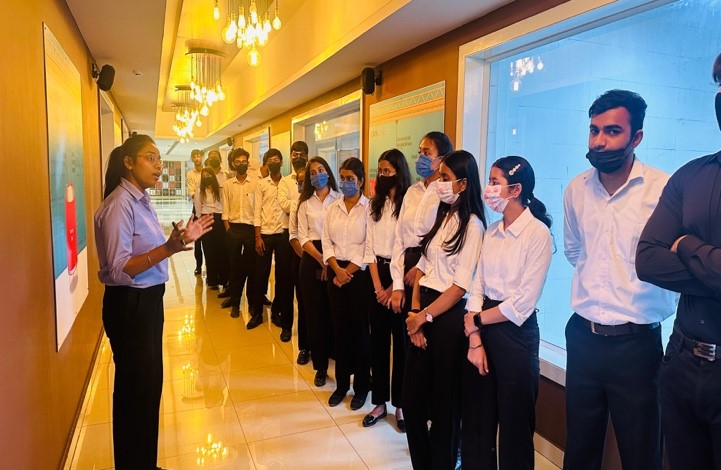
At JIMS,Vasant Kunj-II, learning is not confined to textbooks. The college organizes industry visits to many leading companies such as:
- Coca Cola Happiness Factory, Moon Beverages
- JBM Group
- Mother Dairy
- Yakult
- Bisleri
- Parle
These visits provide firsthand insights into manufacturing processes, quality control, supply chain management and business operations. Students witness real-world applications of classroom concepts, making learning tangible and memorable.
Guest Lectures and Corporate Workshops
JIMS,Vasant Kunj-II regularly invites industry experts from top corporates to deliver guest lectures and workshops. Recent sessions have featured professionals from:
- Dabur
- Accenture
- Reliance Digital
- Del Monte Foods
- Snapdeal
- Axis Bank
- Unit Trust of India
- Hero MotoCorp
Topics range from marketing trends, human resources, finance, customer experience, chat bots, and India’s retail landscape, to emotional intelligence and soft skills. These interactions expose students to the latest industry practices and emerging trends, ensuring they stay ahead of the curve.
Business Talks Club & Classroom Activities
Active Participation in Business Talks Club
Management students at JIMS,Vasant Kunj-II, enthusiastically participate in the dynamic Business Talks Club, which is a hub for developing real-world business acumen. Students have showcased their creativity and analytical skills through engaging activities such as:
The Pitch Battle: A competition where students present innovative business ideas and plans, honing their pitching and persuasion abilities.
Case Study Analysis: Tackling real business scenarios to build problem-solving and decision-making skills.
Designing a Store Layout and Creating an Ad: These activities encourage strategic thinking and creativity, essential for marketing and retail management.
Rise of EVs in Indian Markets: Presentations on trending topics keep students updated on industry shifts and foster research skills.
Enriching Classroom Activities
Beyond clubs, classroom activities are designed to bridge theory with practice:
Conflict Resolution Exercises: Simulating workplace scenarios to build negotiation and interpersonal skills.
Conducting Interviews in HRM: Students practice recruitment processes, preparing them for HR roles.
Preparing Individual Financial Plans: Applying financial concepts to real-life planning.
Audio-Visuals in French Lessons: Enhancing language learning through multimedia.
Role Plays: Developing empathy and communication by acting out business situations.
Mall Visits: Gaining firsthand insights into retail operations and customer behavior.
These initiatives ensure that JIMS students are not only academically strong but also industry-ready, with practical skills and confidence to excel in real business environments.
Summer Internships
A rigorous two-month internship is a mandatory part of the BBA program at JIMS. Students apply their learning in real business environments, gaining invaluable experience and building professional networks. Many students receive pre-placement offers based on their internship performance.
How JIMS Makes You Industry Ready
JIMS, VKII does not just focus on academic excellence but also emphasizes personality development, grooming, and soft skills through:
- Personality development programs
- Communication and leadership workshops
- Time management and delegation training
Active Placement Cell
The dedicated placement cell at VKII campus works tirelessly to connect students with top recruiters. Regular training in group discussions, mock interviews, and aptitude tests ensures students are well-prepared for campus placements.
Alumni Success Stories
JIMS alumni are making their mark in leading organizations across sectors such as Banking, FMCG, IT, Retail, and Consulting. Their success is a testament to the quality of education and practical training provided by the college.
Why JIMS, VK II is Your Gateway to Success?
- Industry-Aligned Curriculum: Designed with input from business leaders and updated regularly.
- Hands-On Learning: Through industry visits, internships, and live projects.
- Expert Faculty: Experienced teachers and visiting industry professionals.
- Corporate Exposure: Regular guest lectures and workshops from top companies.
- Strong Placement Support: Partnerships with leading recruiters and robust placement training.
- Entrepreneurial Support: Guidance for aspiring entrepreneurs to launch their ventures.
Unlock Your Potential with a BBA from JIMS, VK II
A BBA from Jagannath Institute of Management Sciences, Vasant Kunj- II is well known for the Best BBA Course in Delhi NCR and is more than just a degree-it is a transformative experience that equips you with the skills, knowledge, and confidence to thrive in today’s dynamic business world. Whether you aspire to climb the corporate ladder, become an entrepreneur, or pursue further studies, JIMS, VK II provides the perfect platform to launch your journey.
Akanksha Yadav
Assistant Professor
BBA Department
JIMS Vasant Kunj II