
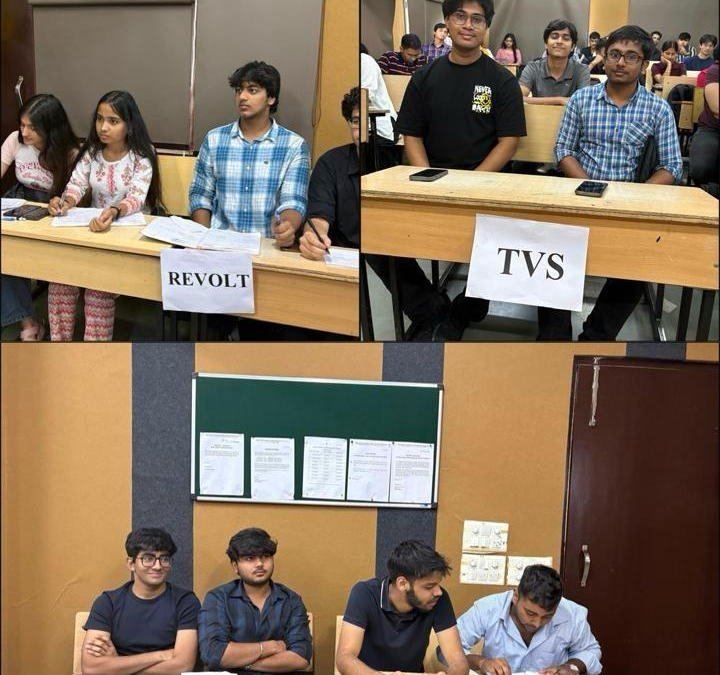
In the fast-paced, ever-evolving world of business, the gap between theoretical knowledge and practical application is a chasm that traditional lecture-based learning often struggles to bridge. As an Assistant Professor in the BBA Department at JIMS, VK II, New Delhi, I recognize that our primary mission is to produce highly capable, decision-ready graduates. This mission is central to why we, at one of the Best Colleges in Delhi NCR, place such a strong emphasis on Case-Based Learning (CBL) as a cornerstone of our Management education.
The Limitations of Rote Learning in Management
A standard BBA curriculum covers essential subjects like Marketing, Finance, Human Resources, and Operations. While mastering concepts, definitions, and models is necessary, true competency in Management requires something more. Simply memorizing the SWOT framework or the steps in the capital budgeting process doesn’t prepare a student to navigate a real-world crisis, negotiate a complex deal, or launch a disruptive product.
The business world is rarely black and white; it’s a spectrum of grays, ambiguities, and competing priorities. A traditional, passive learning environment fails to cultivate the three critical skills that future managers need most:
- Critical Thinking: The ability to analyze complex information, identify core issues, and evaluate multiple perspectives.
- Decision-Making Under Uncertainty: The capacity to choose a course of action when faced with incomplete information and inherent risks.
- Communication and Teamwork: The skill to articulate a clear strategy, defend a recommendation, and collaborate effectively with peers.
This is precisely where the Case-Based Learning methodology becomes indispensable.
What is Case-Based Learning (CBL)?
Case-Based Learning is an instructional method that uses real-life business scenarios—or “cases”—to put students in the shoes of decision-makers. These cases are detailed narratives describing an organization’s situation, challenges, and objectives at a specific point in time.
A Deep Dive into the CBL Process:
- Individual Analysis: Students first read the case independently, identifying the central problem, relevant facts, and key decision criteria. They apply the theoretical tools learned in class (e.g., Porter’s Five Forces, Ratio Analysis) to analyze the situation.
- Small Group Discussion: Students meet in small teams to debate their individual findings. This is a crucial step where they learn to listen, persuade, and synthesize diverse viewpoints—skills vital for any effective manager.
- Class Discussion (The Socratic Method): The final stage involves a moderated discussion led by the professor. The professor acts as a facilitator, probing students with challenging questions rather than simply providing the “right” answer. The emphasis is on the process of analysis and justification, not just the outcome.
In a BBA program at an institution like JIMS, this process transforms the classroom from a venue for information transfer into a simulated boardroom.
The Five Pillars of CBL: Building Decision-Ready Graduates
The benefits of integrating Case-Based Learning into our curriculum are profound and directly contribute to the employability and success of our graduates.
1. Developing Strong Analytical and Critical Thinking Skills
A business case is inherently unstructured and messy, much like reality. Students can’t simply plug numbers into a formula. They must first:
- Discern Relevance: Sift through pages of information (financial data, interview transcripts, market research) to determine what is truly relevant.
- Identify the Root Cause: Distinguish between symptoms and the fundamental problem. For example, is declining sales a market problem (threat from competitors) or an internal issue (poor sales force structure)?
- Synthesize Across Disciplines: A Management problem is rarely confined to one domain. A marketing case might have financial implications, and an operations case might hinge on HR issues. CBL forces students to integrate knowledge from all their BBA courses.
2. Enhancing Practical Decision-Making and Judgment
The core of a case study is the mandate for the student to make a decision and defend it. This is where judgment—the ability to choose a course of action with uncertain outcomes—is honed.
- Risk Assessment: Students learn to weigh the pros and cons of different strategic options, assessing the level of risk associated with each.
- Developing a Course of Action: It’s not enough to say “Company X should do Y.” Students must outline the implementation plan: who will do what, when, and how, including contingency plans. This level of detail is what separates a theorist from a practitioner.
3. Improving Communication and Presentation Skills
The case method demands that students articulate their analysis and recommendations clearly and persuasively, both verbally and in writing.
- Verbal Advocacy: In class discussions, students must present their arguments logically, respond to challenges from peers, and engage in high-level intellectual debate. This builds the confidence necessary for boardroom presentations.
- Written Clarity: Preparing a formal case analysis report requires students to structure their thoughts, use professional language, and present data-driven conclusions. This is direct preparation for writing management summaries and proposals.
4. Fostering Teamwork and Leadership Capabilities
Group case preparation mirrors the cross-functional nature of real-world business teams. Students learn to:
- Manage Conflict: Disagreements over the “right” solution are common. Students learn to manage these conflicts constructively, focusing on data and logic.
- Assume Different Roles: In any group, individuals naturally adopt roles—the leader, the data analyst, the process manager, or the devil’s advocate. CBL provides a safe environment for students to experiment with these roles.
- Collaborate Effectively: Success is tied to the team’s ability to pull together disparate analyses into a coherent, unified recommendation.
5. Providing Contextual Learning and Industry Exposure
Cases expose students to a vast array of industries, geographies, and functional challenges, far beyond what can be covered in a single internship.
- Industry Breadth: Students may analyze a turn-around strategy for an Indian manufacturing company one day and a digital marketing plan for a global tech startup the next. This broad exposure is invaluable.
- Understanding Management Philosophies: Through the narratives, students indirectly learn about different organizational cultures, ethical dilemmas, and the leadership styles of effective and ineffective managers.
JIMS, New Delhi: A Leader in Practical Management Education
At JIMS College, New Delhi, we recognize that simply adopting CBL is not enough; it must be implemented effectively. As one of the Best Colleges in Delhi NCR, our commitment to this methodology involves:
- Faculty Training: Our professors, including those in the BBA department, are continuously trained in the Socratic method of case teaching to ensure they facilitate, rather than dictate, the discussion.
- Global Case Library: We leverage a vast library of globally and locally relevant cases, ensuring that our students grapple with problems faced by Indian companies as well as international giants. This contextual relevance is crucial for an Indian BBA graduate.
- Integration with Core Courses: Cases are not isolated exercises; they are fully integrated into our core courses, serving as the bridge between the textbook chapter and its application.
Conclusion: Preparing Future Leaders for the Ambiguous World
The future of Management is a world defined by volatility, uncertainty, complexity, and ambiguity (VUCA). For our BBA graduates to thrive, they cannot rely on passive knowledge. They must be equipped with the skills of a seasoned professional: the ability to analyze, decide, communicate, and lead.
Case-Based Learning is more than just a teaching technique; it is a philosophy of education. It shifts the focus from what a student knows to how a student thinks and acts. At JIMS VKII, a premier institution in the Delhi NCR region, we are dedicated to using this powerful tool to mold our students into the sharp, pragmatic, and ethical business leaders the world desperately needs.
The case for CBL is closed: it is not a luxury, but an absolute necessity for modern Management education.
Akanksha Yadav
Assistant Professor
BBA Department
JIMS Vasant Kunj II